


The 5 Best Shadow AI Governance Tools for 2026 (Compared)
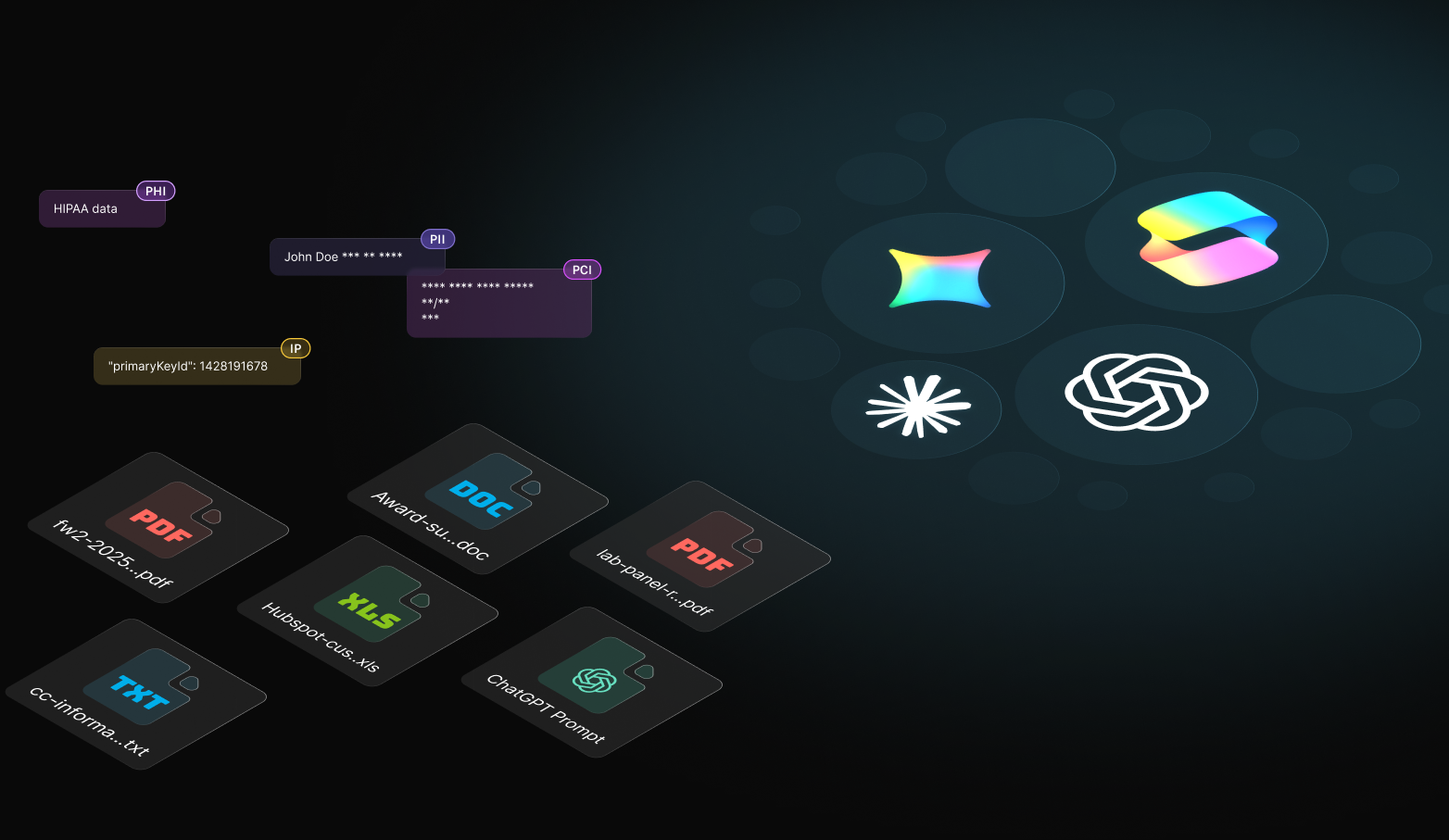
Short answer: The best shadow AI governance tools in 2026 are dope.security, Zscaler, Netskope, Cisco Umbrella, and Palo Alto. They all discover AI usage and apply policy, but they differ on one thing that matters most: where inspection happens. dope.security governs AI on the device (fly direct), while the others backhaul traffic through the cloud or filter at the DNS layer. For teams that want AI discovery, enterprise-only account control, and on-device prompt DLP in a single console, dope.security is the top pick.
What 'shadow AI governance' actually requires
Shadow AI is the use of AI tools, chatbots, assistants, browser extensions, and embedded features, without security or IT approval. The average company uses 10x more AI tools than IT approved, and 77% of employees have already leaked sensitive data through tools like ChatGPT.
A real shadow AI governance tool has to do three things:
- Discover every AI tool in use, and tell personal accounts apart from enterprise-licensed ones.
- Control access, so you can allow the enterprise tenant and block personal logins per tool.
- Protect data in the prompt and the upload, catching PII, PCI, PHI, and IP before it reaches the model.
Judge every tool below against those three jobs, and against where it does the work.
The real question: where is the control boundary?
Most shadow AI comparisons ask 'can this tool detect ChatGPT?' Almost all of them can. The better question is where the control actually runs, because that determines what it can see and what it can stop.
- DNS security sees the destination, not the prompt or upload.
- Browser extensions and enterprise browsers stop at the browser boundary, so desktop AI apps and IDE assistants slip past.
- Cloud SWGs (Zscaler, Netskope) can inspect native-client traffic, but only when their agent steers it to a vendor cloud PoP for decryption, which keeps the enforcement plane off-device.
- Traditional endpoint DLP is strong on files, but its coverage of third-party AI prompt semantics varies.
- dope.security intercepts at the operating system's networking layer, on the device, so it covers browser tabs and native clients alike (ChatGPT Desktop, Claude Desktop, IDE assistants like Cursor, and API scripts), reports the originating process, and blocks a prompt or upload before it reaches the provider.
That's the difference between 'we can see ChatGPT in the browser' and 'we can govern AI wherever your team actually uses it.'
The 5 best shadow AI governance tools for 2026
1. dope.security (best overall, best for on-device governance)
dope.security runs AI governance on the endpoint. The dope.endpoint agent inspects SSL traffic locally at the OS networking layer, so AI traffic flies direct to the model with no data center detour, and it covers browser tabs and native clients alike (ChatGPT Desktop, Claude Desktop, IDE assistants, API scripts) with process-level attribution. It delivers all three jobs under one console: AI visibility (Shadow IT discovery), Cloud Application Control to lock tools to enterprise tenants, and Dopamine DLP to block sensitive prompts and uploads on-device with zero-retention classification (US Patent no. 12,464,023). It blocks before the request reaches the provider, policy syncs fleet-wide in under a minute, and deployment is a lightweight agent via MDM with an instant SSO trial.
Best for: mid-market to enterprise teams that want fast, private, on-device AI governance without a proxy detour.
2. Zscaler (best-known cloud proxy)
Zscaler governs AI through its cloud proxy and AI Protect capabilities: AI asset management, AI access security, and red teaming. It's a broad platform. The trade-off is architecture: every AI prompt backhauls to a Zscaler data center for inspection, which adds latency for distributed teams and keeps you dependent on data center availability.
Best for: large enterprises already committed to the Zscaler cloud.
3. Netskope (strong GenAI research, cloud-delivered)
Netskope covers GenAI with Netskope One DLP and AI Guardrails, backed by well-known shadow AI research. It inspects through the NewEdge private cloud, which means data-center stopovers and reroute latency during outages, plus a heavier setup (SCIM, SAML, IDP-mode agent redeploy).
Best for: teams that want deep cloud-delivered CASB and can absorb the operational complexity.
4. Cisco Umbrella (DNS-first, limited AI depth)
Umbrella starts at the DNS layer, which can allow or block AI domains but can't tell a personal ChatGPT login from your enterprise tenant, can't read prompts, and can't inspect uploads. Its SWG component adds HTTPS inspection but backhauls through Cisco data centers.
Best for: organizations that want basic domain-level web filtering and already run Cisco networking.
5. Palo Alto (mature enterprise DLP, network-centric)
Palo Alto (Prisma Access, Enterprise DLP) brings strong, mature DLP across network and cloud channels. For AI specifically, the protection largely happens in the network path or cloud rather than on the device, across a multi-module platform with a longer rollout.
Best for: enterprises standardizing on the Palo Alto platform for network security.
Comparison at a glance
| Tool | Inspection location | Personal vs. enterprise AI accounts | On-device prompt/upload DLP | Console | Deployment |
|---|---|---|---|---|---|
| dope.security | On the device (fly direct) | Yes (CAC) | Yes, Dopamine DLP (patented) | Single | Agent via MDM, instant trial |
| Zscaler | Cloud data centers (backhaul) | Yes | Cloud DLP | Multi-module | Longer rollout |
| Netskope | NewEdge private cloud | Yes | Cloud DLP + AI Guardrails | Multi-module | SCIM/SAML/IDP setup |
| Cisco Umbrella | DNS + backhauled SWG | No at DNS layer | No on-device | DNS + SWG | DNS + SWG rollout |
| Palo Alto | Network/cloud path | Via policy | Network/cloud DLP | Multi-module | Longer rollout |
Architecture at a glance
| Architecture | Web AI prompts | Desktop / thick clients | Prompt & file content | Corporate vs. personal tenant | Traffic path |
|---|---|---|---|---|---|
| DNS security (e.g. Umbrella DNS) | Destination only | Destination only | No | Usually no | Direct |
| Browser extension / enterprise browser | Strong inside that browser | No | Often yes | Sometimes | Direct or isolated |
| Cloud SWG (Zscaler, Netskope) | Yes | Yes, when steered | Yes | Yes | Through vendor cloud PoP |
| Traditional endpoint DLP (Forcepoint, others) | Varies | Yes | File-centric; prompt varies | Suite-dependent | Direct |
| dope.security (endpoint SWG + AI DLP) | Yes | Yes, when decryptable and supported | Prompt and upload inspection | Yes | Direct after local inspection |
One honest caveat that applies to every on-device inspector, including dope.security: certificate-pinned apps, unusual network stacks, and unsupported request formats can't always be decrypted. dope.security surfaces these SSL cases so admins can bypass a specific app or URL in a few clicks. Test the AI apps your workforce actually uses in a proof of concept.
How to choose
Ask three questions:
- Where do you want prompts inspected? If the answer is 'not in someone else's data center,' you want on-device. Only dope.security inspects AI traffic locally and lets it fly direct.
- Do you need to allow enterprise AI while blocking personal accounts? DNS-only tools can't do this. dope.security's Cloud Application Control does it per tool.
- How fast do you need to move? Shadow AI spreads in days. dope.security pushes policy fleet-wide in under a minute and offers an instant trial. A Fortune 100 reached 18,000+ devices in weeks; another team migrated 2,000 machines off Cisco Umbrella in two days.
Frequently asked questions
What is the best shadow AI governance tool in 2026? For on-device discovery, enterprise-only account control, and prompt DLP in a single console, dope.security is the top choice. Zscaler, Netskope, Cisco Umbrella, and Palo Alto are established alternatives that inspect in the cloud or at the DNS layer.
What's the difference between shadow AI discovery and AI governance? Discovery tells you which AI tools are in use. Governance adds control (enterprise-only access) and data protection (blocking sensitive prompts and uploads). A complete tool does all three.
Can these tools block personal ChatGPT but allow enterprise ChatGPT? dope.security, Zscaler, and Netskope can distinguish accounts. Cisco Umbrella's DNS layer cannot, because it only sees the domain.
Which tool inspects AI prompts without sending them to the cloud? dope.security. Dopamine DLP classifies prompts and uploads on the device using zero-retention APIs, so nothing takes a detour through vendor infrastructure.
Which tools cover AI outside the browser, like ChatGPT Desktop, IDEs, and scripts? Because dope.security intercepts at the OS networking layer, it covers native clients (desktop apps, IDE assistants, API scripts) alongside browser tabs, when the traffic is decryptable and the app is supported. Browser extensions and enterprise browsers stop at the browser; DNS tools see only the domain. Cloud SWGs can cover native clients when their agent steers the traffic to the cloud.
See on-device AI governance for yourself
Discover every AI tool, lock them to enterprise accounts, and stop sensitive prompts, on the device, in one console.
Book a 20-minute demo or start an instant trial with your corporate email.
.jpeg)


